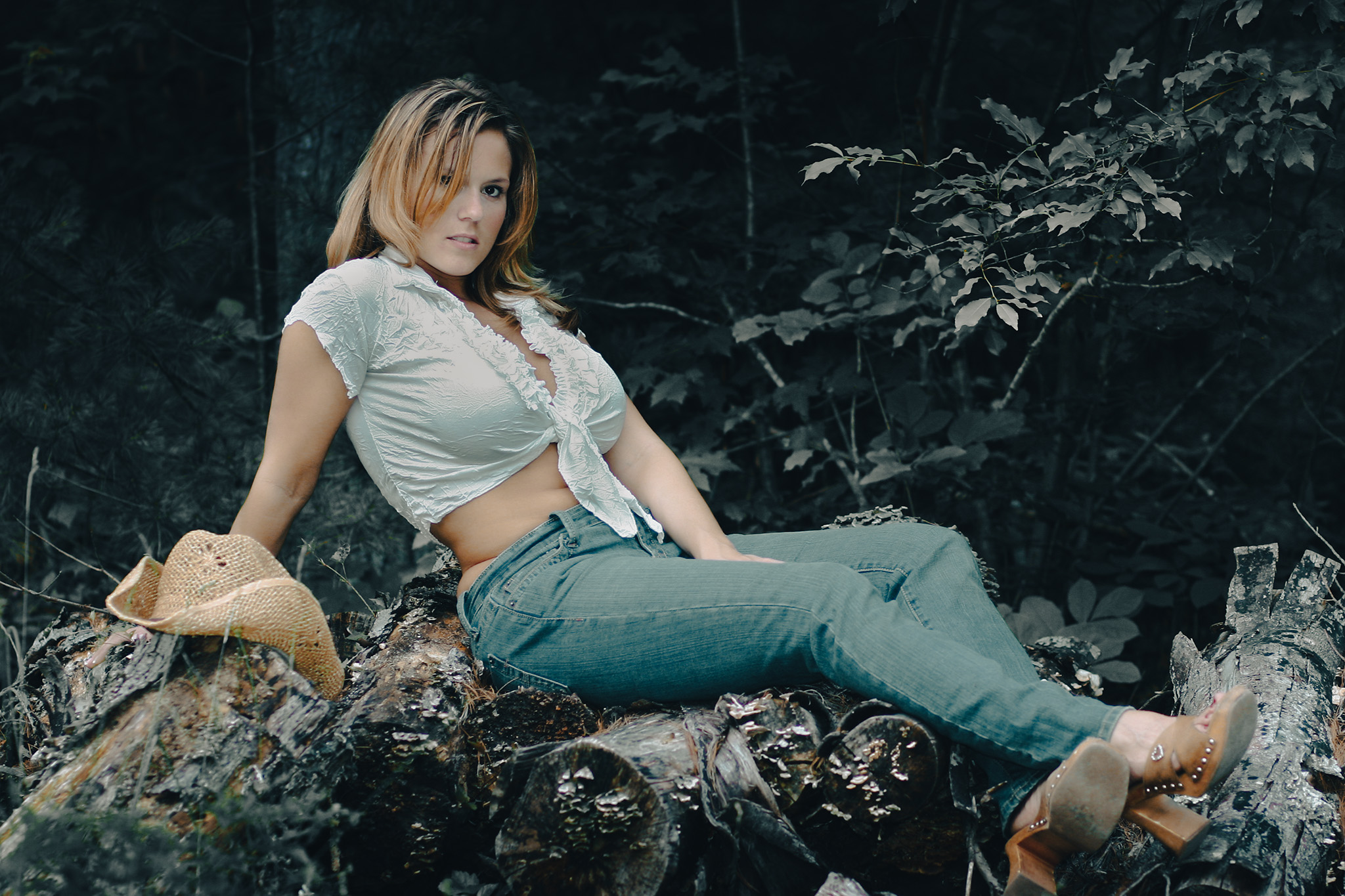
My idea of a good portrait has changed over time. I still appreciate a clean, direct photograph, but I am increasingly drawn to images that feel as if something happened just before the frame, with something else about to happen just after it.
That is what I mean when I describe a portrait as cinematic. It is not necessarily dramatic, heavily edited, or made with elaborate equipment. It simply carries a sense of atmosphere and a story larger than the single image.
It Begins With Light That Has Direction
Flat, even light can be flattering and clear. Directional light does something different: it reveals shape. It moves across a face, catches texture, and allows shadow to become part of the picture.
I often notice this light near a window, under the edge of a building, or late in the day when the sun is lower. New England gives us wonderful examples in spring and fall, when the light arrives at an angle and changes quickly. You do not need to control it completely. Sometimes it is enough to turn toward it, move a step sideways, and watch what happens.
The shadows are not a problem to eliminate. They can create depth, quietness, or mystery. For me, cinematic light is less about making everything visible and more about deciding what deserves attention.
The Moment Does Not Have to Be a Pose
Many of my favorite portraits happen around the intended photograph. Someone adjusts a sleeve, looks toward a sound, walks into place, or pauses after laughing. These gestures are small, but they make an image feel inhabited.
A formal pose asks a person to hold an appearance. A simple action gives the body a reason to move. That difference can be subtle, yet it changes the energy of the frame.
This does not mean every portrait must be candid. A photograph can be carefully arranged and still feel natural. I think the key is leaving enough room for the person to bring something of themselves to the idea.
The Environment Belongs to the Story
In a cinematic portrait, the surroundings are more than decoration. A narrow street, an open shoreline, a dim room, or a patch of evening light can tell us something about the mood before we study the expression.
I like to ask what a place contributes. Does it make the person feel solitary or connected? Does its color echo the clothing? Do the lines lead toward the face? Could this particular portrait have been made anywhere else?
Sometimes the answer is to include more of the environment. At other times, one suggestion, such as a doorway, a curtain, or the reflection of a streetlight, is enough.
Restraint Often Helps
It is tempting to make a cinematic photograph by adding more: stronger colors, deeper contrast, wider compositions, or a dramatic expression. I usually find that choosing one or two ideas works better.
Perhaps the light is the main character and everything else stays quiet. Perhaps the setting carries the mood while the expression remains understated. A portrait can suggest a story without explaining all of it.
Traditional portraits still have an important place in how I photograph people. Direct eye contact and simple light can be powerful. But creatively, I keep returning to pictures with a little ambiguity, images that invite us to wonder rather than giving us every answer.
If you want to experiment with this feeling, begin simply. Find light coming clearly from one direction, give the person something small to do, and include only enough of the surroundings to create context. Then pay attention to the moments between the pictures you expected to make. That is often where the story appears.